 31 March 2026 – PhD Defence Brandon Ferlito
When: 15: 00 to 17: 00 (online or in-person)
Where: Lokaal 0.8, Campus Boekentoren (Entrance via Sint-Hubertusstraat 8).
Abstract: Artificial intelligence (AI) increasingly shapes healthcare practice, influencing clinical decision-making, access to care and the organisation of health systems. These developments complicate how responsibility is understood, particularly when harms arise through distributed socio-technical processes rather than individual fault. This dissertation examines how responsibility operates in AI-driven healthcare. It argues that individualistic and attribution focused conceptualisations of responsibility fail to capture how AI-related harms are produced through institutional structures, data practices, design choices, and regulatory conditions. Across different healthcare contexts, responsibility is shaped by actors’ power, positions, and involvement within these systems. Against this background, the dissertation develops a plural conceptualisation of responsibility in AI-driven healthcare, in which responsibilities are structural, differentiated, collective, forward-looking, epistemic, and relational. They extend beyond attribution after harm toward practices of prevention, responsiveness, and justice across the AI lifecycle. The dissertation concludes that responsibilities in AI-driven healthcare are redistributed across socio-technical systems. Ethical analysis and governance must therefore attend to how responsibilities are structured and enacted in practice, rather than focusing solely on individual accountability.
More information & registration
 9 April 2026 – DIME closing conference: Disruption in healthcare and medical ethics: are we there yet?
When: 9: 00 to 16: 10 (in-person)
Where: Faculty library of Arts and Philosophy (Entrance via Rozier 44).
Abstract: The DIME project is inviting you to our closing symposium at Ghent University on the 9th of April. This in-person symposium has as its aim to bring together researchers addressing issues related to the objectives of DIME in bioethics, medical ethics, and the philosophy of technology. In addition to contributions from current DIME members, the discussion will be enriched by our two keynote speakers: Jeroen Hopster (Utrecht University) and Simona Tiribelli (University of Macerata). You can find the program here.

6 May 2026 – GANDAIUS studienamiddag i.s.m. Metamedica – Van advocaat tot magistraat: impact AI op deskundigheid (in Dutch)
When: 13:00 to 17:15 (in-person or on-demand)
Where: Faculty of Law and Criminology, Campus Aula (Entrance via Volderstraat).
Abstract: Generatieve artificiële intelligentie (AI) dringt steeds dieper door in de juridische praktijk. De beloftes zijn groot, maar de risico’s zijn dat ook. Generatieve AI zou het juridisch werk efficiënter en kwalitatiever maken. Daartegenover staan grote risico’s zoals de vraag hoe AI de deskundigheid van de advocaat beïnvloedt. Wordt deze versterkt, vervangen of misschien zelfs ondergraven? Het volledige programma kan je hier vinden.
Past Metamedica-events
26 februari 2026 – Doctoraatsverdediging Paulien Walraet
Waar: Faculteit Recht en Criminologie, Facultaire raadzaal
Wanneer: 17u
Omschrijving: Wanneer een arts wordt geconfronteerd met een vermoeden of vaststelling van seksueel geweld bij een patiënt, moet hij zich een weg banen in een complex juridisch en deontologisch kader om aan deze patiënt gezondheidszorg te kunnen verschaffen. Doorheen de jaren werden tal van bronnen met een verschillende hiërarchische waarde afzonderlijk van elkaar ontwikkeld, die elk direct dan wel indirect een invloed hebben op hoe een arts moet omgaan met seksuele geweldsincidenten. In deze scriptie wordt gezocht naar een manier waarop het huidig geldend juridisch en deontologisch kader dat de arts moet respecteren ten aanzien van een slachtoffer van seksueel geweld kan worden teruggebracht tot enkele basiscriteria, op grond van dewelke de arts op een pragmatische manier kan omgaan met seksueel geweld, doch tevens juridisch en deontologisch correct kan handelen
Meer informatie en registratie
 18 September 2025 – The European Health Data Space – Challenges, difficulties and opportunities
Where: to be determined
When: 5 p.m. – 7.30 p.m.
Description: Since the approval of the European Health Data Space Regulation, experts have examined the challenges, difficulties, and opportunities it creates for the European Healthcare sector. Several of these experts will take the stand during this symposium.
 20 June 2025 – Dare to think about health tech innovation
Where: Event Center at the Belgian Pavilion, World Expo, Osaka
When: 6 p.m. – 9 p.m.
Description: At Ghent University and Ghent University Hospital, we believe in responsible innovation. We not only connect engineers, AI experts and health care professionals to develop high–level health technology, we also stimulate research into the ethical, legal and social implications of these innovations. By uniting expertise in health law, medical ethics, psychology, communication sciences and many other disciplines, we ensure societal impacts are studied before, during and after the implementation of health technologies. This event will illustrate this cross-disciplinary approach by highlighting key aspects such as medical ethics and the impact of AI on healthcare roles and decision-making.

-
2 June 2025 – Citizen involvement in health tech and the role of ethical principles-based frameworks
Where: Online
When: 4 p.m. 6 p.m.
Description: Today, it is impossible to think of health care or research without the use of digital technology and AI-based tools – all of which rely on the use and re-use of the personal data of citizens and patients. The latest proliferation of EU laws stemming the European Data Strategy has led to a complex legal framework to comply with (as developer) and rely on (as citizen). The promise of new policy initiatives is to make more data available for (re)use, while empowering citizens with respect to the control over their personal data. In this respect, citizen involvement is crucial but many questions as regards its operationalization remain open. Ethical principles-based frameworks (such as the Belgian 8 caring technology principles) promise to ensure a central place for the user in the design and development of new technologies.An interdisciplinary and international panel, including Stefan Gijssels (chair of the Patient Expert Center), Dr. Magdalena Eitenberger (social sciences, University of Vienna), Prof. Tom Braekeleirs (digital medical technology, Ghent University), Gauthier Chassang (law, French National Institute of Health and Medical Research) and Erik Laes (VITO) will explore citizen involvement in health tech development and the role ethical principles-based frameworks could play to foster it (moderation by Dr. Teodora Lalova-Spinks, Ghent University).
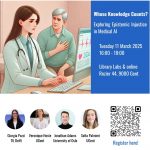 11 March 2025 – Whose Knowledge Counts? Exploring Epistemic Injustice in Medical AI
Description: Who is the most credible source of personal medical information—the patient sharing their personal experience or the medical AI system fed with digital metrics and parameters? And whose advice should a patient follow—that of the physician who knows them personally or that of an automated AI system trained on more data than their doctor? Could AI systems in medical decision-making undermine the credibility of both patients and physicians? Do such systems impair understanding and fundamental communication practices between patients and physicians?
In this lecture, we invited Giorgia Pozzi (TU Delft), who addressed these questions through the concept of epistemic injustice. This concept has inaugurated a new research area in AI ethics and medicine that seeks to identify epistemically unjust ways of conceiving illness, treating individuals, and allocating healthcare.
After Pozzi’s introductory lecture, an interdisciplinary panel of scholars, including Jonathan Adams (ethics), Veronique Hoste (natural language processing) and Sofia Palmieri (law), exchanged ideas about AI in the healthcare landscape and the relevance of epistemic injustice (moderation by Heidi Mertes).
Recording of the presentation of Giorgia Pozzi
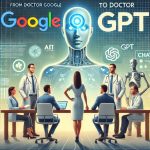 19 november 2025: Van Dokter Google naar Dokter GPT – De rol van (generatieve) AI in de patiënt-artsrelatie (Dutch)
Beschrijving: Op 19 november 2024 organiseerde Metamedica met ondersteuning van de Ghent Health Academy for Lifelong Learning, GHALL, een debatavond waarbij Heidi Mertes in gesprek ging met Peter Pype (huisarts), Seppe Segers (ethicus), Tom Goffin (gezondheidsjurist) én het publiek over hoe de intrede van AI in de gezondheidszorg de patiënt-arts relatie verandert.
De introductie van AI in de gezondheidszorg lijkt onvermijdelijk gezien het enorme potentieel om de zorg te verbeteren en hopelijk ook efficiënter te maken. Tegelijk moeten we de nodige zorgvuldigheid aan de dag leggen zodat het vertrouwen van de patiënt in de medische zorgverlener niet afbrokkelt. Daarvoor hebben we interdisciplinaire samenwerking nodig, zodat vooruitgang in geneeskunde en IT hand in hand kan gaan met recht en ethiek.